



Water Filter Jug vs Tap Filter vs Under-Sink
Health | 21-10-26

Water Filter Jug vs Tap Filter vs Under-Sink: Which Wins?
Every filter promises cleaner water. But when you compare what each type actually removes (and what it doesn’t) the differences are significant. We put water filter jugs, tap-mounted filters and under-sink systems side by side on taste, contaminant reduction, certifications and long-term cost.
Why the type of filter matters more than the brand
Most Australians don’t need to filter their tap water to make it safe. Our drinking water is among the safest in the world, regulated by the Australian Drinking Water Guidelines and monitored by state and territory health authorities.
But “safe” and “pure” aren’t the same thing. Chlorine affects taste. Ageing pipes can introduce lead and sediment. And emerging contaminants such as PFAS and microplastics are drawing increasing attention from researchers and regulators alike.
A filter can address all of these, but only if it’s certified to do so. That’s where the type of filter you choose really matters. So, let’s compare the three types quickly: water filter jugs, tap-mounted filters and under-sink systems that get plumbed in.
Water filter jugs: convenient, but limited
A water filter jug is the simplest entry point. Fill the reservoir, wait for gravity to pull water through the cartridge, and pour. No installation and no plumber.
Standard jug filters are typically certified to NSF/ANSI Standard 42 only. That standard covers aesthetic improvements: chlorine taste, odour and sediment. It’s more about how much you enjoy your water. It does not cover health-related contaminants such as lead, cysts (Cryptosporidium and Giardia) or PFAS.
Consumer NZ testing found that a popular brand of jug reduced chlorine by more than 94% and heavy metals by 98% – strong results for what it’s designed to do. But other jugs in the same test performed far worse: one budget model managed only roughly 50% removal.
The PFAS question
A 2024 study from Université de Montréal, published in Frontiers in Environmental Chemistry, tested five pitcher-style filters against 75 PFAS compounds. Standard filters from a popular water jug brand reduced PFAS by just 38% on average. Premium models (from the same brand) achieved 99%, but those carry a significantly higher cartridge cost and aren’t widely available in Australia.
The same study found that source water chemistry dramatically affects filter performance, meaning lab results don’t always translate to your kitchen.
Cartridge life and cost
A standard jug cartridge lasts around 150 litres, which is roughly one month for a household of two. Of the three filter types, jugs have the lowest upfront cost, but you’ll regularly need to buy new filters.
There’s also a practical consideration. Researchers at Université Gustave Eiffel (Da Costa et al., 2024) found that filters with plastic housings can release microplastics into filtered water, in some cases even producing higher microplastic concentrations than unfiltered tap water.
Tap-mounted filters: a step up, with trade-offs
Kitchen tap-mounted water filters attach directly to your kitchen tap and filter water on demand.
Most tap-mounted filters use activated carbon, certified to NSF/ANSI 42 for chlorine and taste. Some higher-end models hold NSF/ANSI 53 certification for lead or cyst reduction, but most filter for chlorine and taste only. Always check the specific model’s certification rather than assuming the brand covers it.
Flow rate is the main practical drawback. Because water passes through a small cartridge under mains pressure, filtered flow is noticeably slower than unfiltered (typically around 2 litres per minute, compared to 7-9 litres per minute from an unfiltered tap without an aerator). Most units include a bypass switch so you’re not filtering water used for washing dishes.
Compatibility and lifespan
Not every kitchen tap accepts a filter attachment. Pull-out mixer taps, spray heads and non-standard spout shapes may not be compatible. Cartridge life varies from 1,200 to 2,800 litres depending on the model. CHOICE estimates lower annual running costs than jugs for comparable filtration.
Tap-mounted filters don’t connect to the plumbing system, so they’re not subject to WaterMark certification, the mandatory national scheme that governs products plumbed into Australian water supplies.
Under-sink filtration: the broadest protection
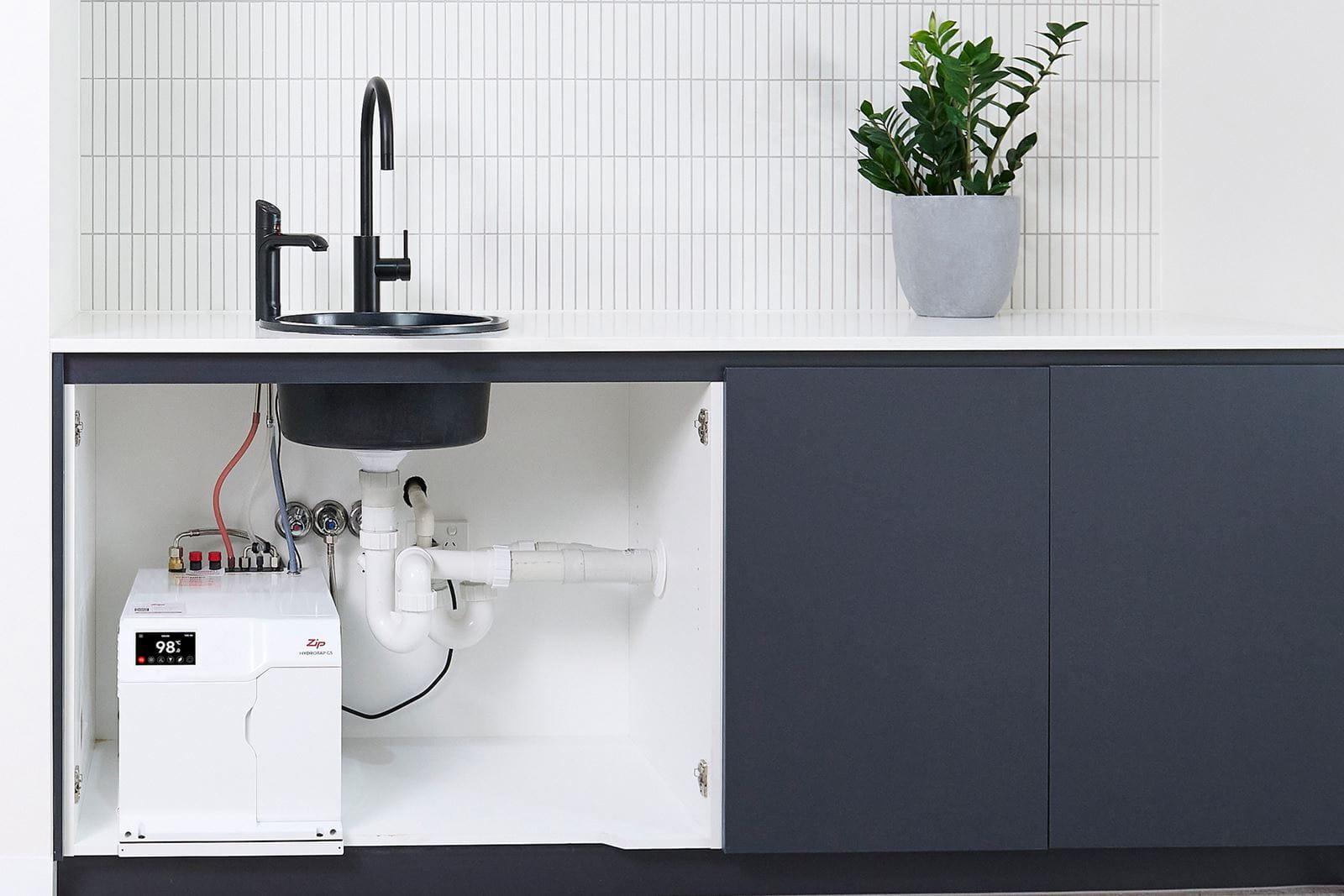
Under-sink systems connect directly to the cold water supply beneath your kitchen bench and deliver filtered water through a dedicated tap or your existing mixer tap.
Because they’re plumbed in, they must carry WaterMark certification and comply with AS/NZS 3497, which is a level of regulatory oversight that jugs and tap-mounted filters aren’t required to meet.
That plumbing connection also allows for larger, denser filters. Where a jug cartridge holds a few tablespoons of activated carbon, an under-sink cartridge can pack significantly more, while also combining multiple filtration stages.
That larger filter capacity is what allows under-sink systems to meet stricter international testing standards, not just for taste and odour, but for contaminants that can affect your health. Certified under-sink systems are independently tested to reduce things like lead, PFAS, and parasitic cysts (NSF/ANSI 53), and some go further, targeting emerging contaminants such as microplastics and pharmaceutical traces (NSF/ANSI 401). Most jug and tap-mounted filters aren’t designed to reduce these types of contaminants.
What the research shows
A 2020 study from Duke University and NC State, published in Environmental Science & Technology Letters, tested 76 point-of-use and 13 whole-house filters for PFAS removal. Under-sink reverse osmosis systems achieved near-complete removal. Activated carbon filters (the type used in most jugs and tap-mounted units) were, in the researchers’ words, “inconsistent and unpredictable.”
The takeaway: not all activated carbon is equal. Filtration area, contact time, pore size and certification standard all matter. As an example, our own filters which use activated carbon (as just one part of our MicroPurity filtration) are independently tested to remove 99.4% of total PFAS*.
Installation and cost
Under-sink systems require professional installation, making them the highest upfront investment of the three types. But cartridge life is substantially longer (6 to 12 months depending on usage) and the system delivers far broader contaminant reduction for that spend.
Side-by-side: how the three types compare
|
Water filter jug |
Tap-mounted filter |
Under-sink system |
|
|
Typical certification |
NSF/ANSI 42 (aesthetic) |
NSF/ANSI 42; some models NSF/ANSI 53 |
NSF/ANSI 42, 53 and 401 |
|
Chlorine reduction |
~50-94%+ (varies widely) |
Comparable to jugs |
Highest (when independently certified) |
|
PFAS reduction |
20-99% (model-dependent) |
Limited data |
Up to 99.4% (certified systems) |
|
Lead and cysts |
Generally not certified |
Some models certified |
Certified (NSF/ANSI 53) |
|
Microplastics |
Not typically certified; plastic housing risk |
Not typically certified |
Certified systems available (NSF/ANSI 401) |
|
WaterMark required |
No (not plumbed in) |
No (not plumbed in) |
Yes (mandatory) |
|
Flow rate |
N/A (gravity-fed, slow) |
~2 L/min (reduced) |
Mains pressure; no reduction |
|
Cartridge life |
~150 L / ~1 month |
1,200-2,800 L / 2-4 months |
6-12 months |
Sources: CHOICE, Consumer NZ, NSF International, manufacturer specifications.
Why filter replacement timing matters
A filter’s certification tells you what it can reduce when new. But performance degrades as the cartridge loads up with the contaminants it’s capturing. The Duke/NC State study found that activated carbon filters delivered inconsistent PFAS results, and filter age was one contributing factor.
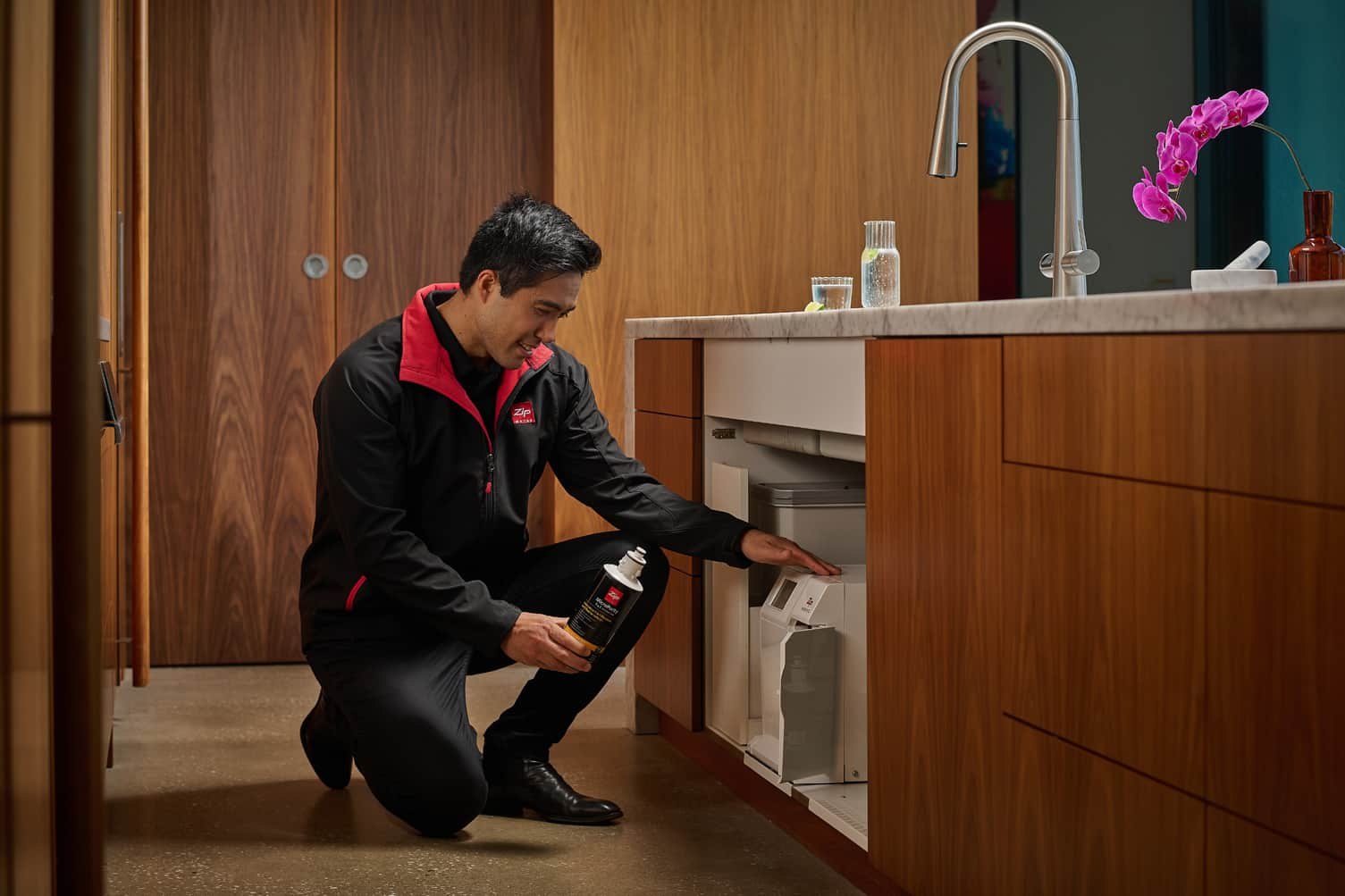
Overrunning a cartridge doesn’t just reduce effectiveness; in some cases, accumulated contaminants can release back into the water. Sticking to the manufacturer’s replacement schedule is the simplest way to keep your filter performing to its certification.
Learn more about whether PFAS can be filtered from water and why filtration maintenance matters.
What about reverse osmosis and whole-house systems?
Two other options sit outside the comparison above but are worth knowing about.
Reverse osmosis (RO) systems use a semi-permeable membrane to remove up to 99% of dissolved solids, including PFAS, heavy metals and fluoride. They’re the most thorough filtration available for point-of-use applications.
The trade-off is wastewater. A standard RO system can produce around 3 to 4 litres of waste for every 1 litre filtered (though some newer high-efficiency models reduce this significantly). And they strip beneficial minerals like calcium and magnesium along with contaminants. They also require more maintenance and typically need remineralisation to improve taste.
Whole-house systems filter all water entering the property, covering showers, laundry and garden taps as well as drinking water. However, the Duke/NC State study found that some whole-house activated carbon systems actually increased PFAS concentrations in filtered water.
Whole-house systems suit specific uses (like bore water, or regional sediment issues) but aren’t a substitute for point-of-use filtration where contaminant reduction matters most.
For most Australian households, an under-sink system at the kitchen tap provides the strongest balance of certified contaminant reduction, flow rate and practicality.
How Zip HydroTap fits in
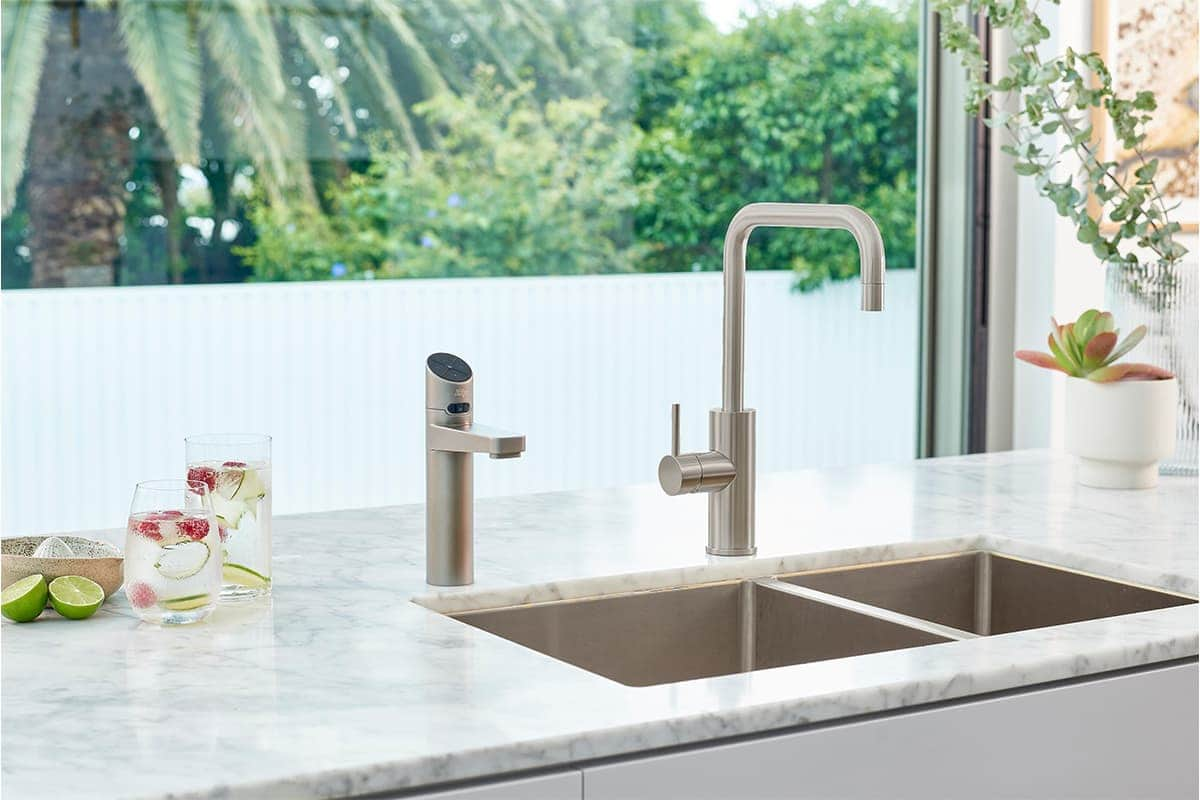
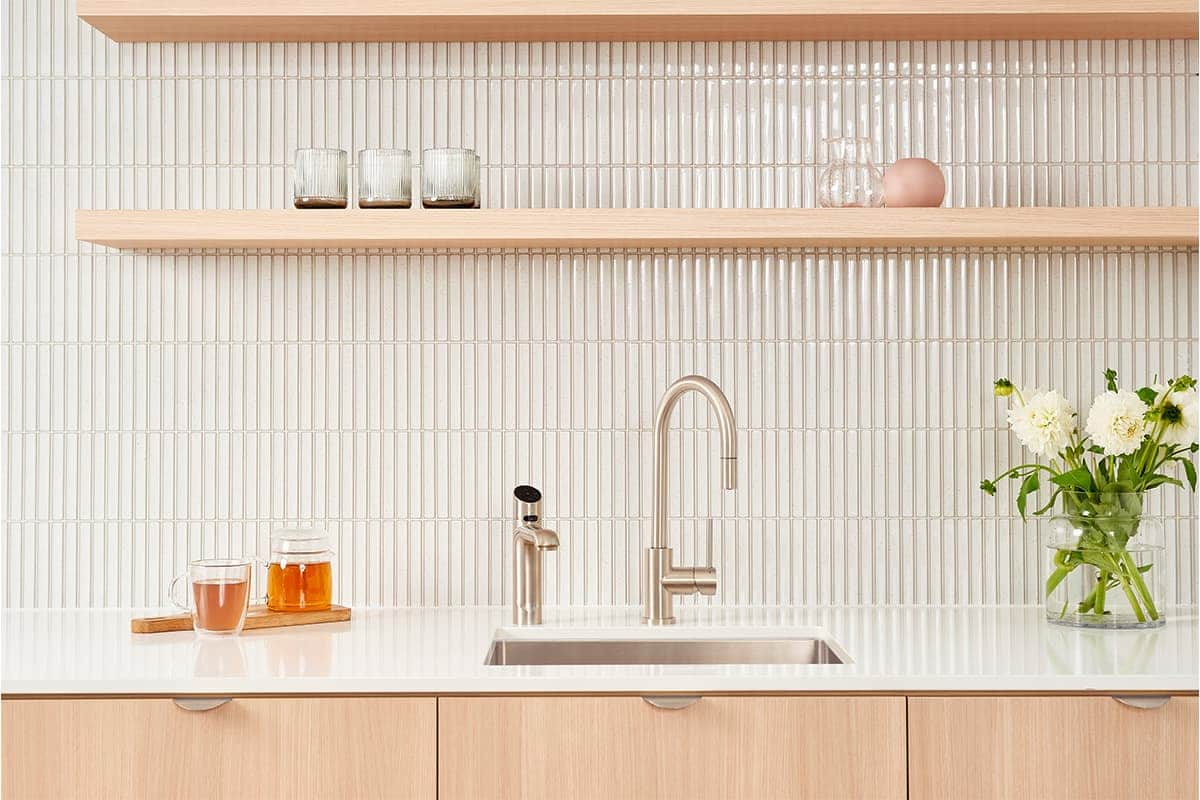
Zip’s HydroTap uses under-sink filtration, but it goes well beyond a standard filter. It’s a complete drinking water system – you can pour filtered boiling, chilled and sparkling water from a single tap.
The MicroPurity filtration system uses 0.2-micron filtration with Triple Action Technology. It combines activated carbon, microfiltration and an electropositive membrane to reduce the eight most harmful contaminants in our drinking water (microplastics, lead, asbestos, sediment, chlorine, bacteria, Cryptosporidium and Giardia, and 99.4% of total PFAS*). It’s independently certified to NSF/ANSI 42, 53 and 401.
Beyond filtration, HydroTap delivers instant filtered boiling, chilled and sparkling water from a single tap, replacing your kettle, jug filter and sparkling water maker.
If you want the broadest contaminant reduction and the purest taste without the clutter of jugs, cartridges and bottles, we designed HydroTap to be the only water system you need.
Learn more about the HydroTap or explore the full range.
For a deeper look at under-sink options, see our under-sink water filtration buyer’s guide.
Frequently asked questions about water filters
Are water filter jugs worth it?
For improving chlorine taste on a budget, yes. But most jug filters aren’t certified to reduce health-related contaminants such as PFAS, lead or cysts. If contaminant reduction matters to you, check whether your jug filter holds NSF/ANSI 53 certification, not just NSF/ANSI 42.
How do I filter tap water at home?
You have three main options: a water filter jug (no installation), a tap-mounted filter (attached to your existing tap) or an under-sink system (plumbed in by a licensed plumber). Each suits different needs and budgets. For a full rundown, see our guide on how to filter tap water.
Do water filters remove PFAS and microplastics?
Some do, but only if they’re certified for it. NSF/ANSI 53 covers PFAS; NSF/ANSI 401 covers microplastics and emerging compounds. Standard jug and tap-mounted filters typically don’t carry these certifications. Learn more about whether water filters remove microplastics.
* Zip MicroPurity filters sizes 1 and 1.5 (93701 and 93702) are certified to NSF/ANSI Standard 53 to reduce 99.4% of Total PFAS (average reduction).