




Under Sink Water Filter Buyer's Guide (2026) | Zip Water
Health | 21-10-26

Under-Sink Water Filter Buyer's Guide: What to Know Before You Install
An under-sink water filter is a water treatment system installed beneath your kitchen bench. It connects to your cold water supply and filters drinking water right before it reaches your glass.
Depending on the system, filtered water might flow through your regular kitchen tap, or use a separate one just for filtered water.
Unlike whole-house systems, an under-sink water filter system focuses specifically on the water you drink and cook with. That focus allows for finer filtration and catches contaminants that broader systems aren’t designed to remove.
This guide will help you choose the best under-sink water filter for your home.
Why choose an under-sink system?
Point-of-use precision
An under-sink filter treats water at the last stage before you drink it. That means it catches contaminants your pipes may introduce (things like trace metals from older plumbing, or sediment that accumulates between the street and your kitchen tap).
Out of sight, always ready
Everything sits under the bench. No jugs in the fridge, no bulky attachments on your tap, no bench clutter. Just cleaner water, ready when you turn on the tap.
Better taste, more water
Chlorine, sediment, and pipe-related additives are the most common reasons Australian tap water doesn’t taste as good as it could. A quality under-sink filter addresses all three. And as a 2025 study of nearly 3,000 adults found, when water tastes better, you drink more of it. For a deeper look at the benefits, see our guide to filtered water vs tap water.
Cheaper than bottled
A quality under-sink system costs a fraction of what most households spend on bottled water over time. Most under-sink systems pay for themselves quickly, and keep saving you money year after year without the plastic waste.
Types of under-sink water filter systems
Not all filtration systems do the same job. The best under-sink water filter system for your home depends on your water source, your contaminant concerns, and what you want from your tap.
Direct-connect / inline carbon filters
A single cartridge that connects directly to your existing cold water line or tap. No dedicated tap needed. These are the simplest under-sink option (usually a single-stage activated carbon filter), and the most affordable.
They reduce chlorine taste and odour along with basic sediment, but they won’t reliably remove PFAS, fluoride, heavy metals, or microplastics. Typical pore sizes range from 0.5 to 5 microns.
Filter life varies; some cartridges last as little as three months, others up to twelve.
Best for: Renters, budget-conscious buyers, or anyone wanting a basic taste improvement without permanent plumbing changes.
Trade-offs: Limited filtration depth. Most models don’t carry independent health-effect certifications. You’re improving taste, not addressing emerging contaminants.
Multi-stage carbon and sediment systems
These systems usually require a dedicated filtered water tap drilled through the benchtop, though some premium systems integrate with an all-in-one mixer tap that replaces your existing kitchen tap entirely.
A typical setup runs a sediment pre-filter to catch larger particles, followed by one or two activated carbon blocks for chemical and contaminant reduction.
Quality systems filter down to 0.2 microns – fine enough to reduce microplastics, lead, cysts, asbestos fibres, bacteria, and even PFAS. But only if independently certified to do so. A system with a 1-micron or 5-micron rating and no performance certification is a very different product from one certified to NSF/ANSI 53 at 0.2 microns, even though both are sold as “multi-stage under-sink filters.”
Pricing ranges from moderate to premium for these systems, but the premium pricing usually reflects a fully integrated filtration system that can give you boiling, chilled and sparkling water in a single tap.
Best for: Families and health-conscious households on treated town water who want certified contaminant reduction (not just taste improvement).
Trade-offs: Requires professional installation. Ongoing filter replacement costs. Performance varies enormously between brands, which is why certification matters so much (more on that below).
Reverse osmosis (RO) systems
Reverse osmosis filters use a semi-permeable membrane with pore sizes of approximately 0.0001 microns. That’s fine enough to remove almost everything, including fluoride, total dissolved solids (TDS), heavy metals, PFAS, bacteria, nitrates, and microplastics. They’re the most thorough under-sink filtration available.
But that thoroughness comes with trade-offs. A peer-reviewed 2023 study found that RO systems also strip out 92-99% beneficial minerals like calcium and magnesium, which give water its taste and nutritional value.
Some systems include a remineralisation stage to add them back. RO units produce significant wastewater during filtration – typically three to four litres of waste for every one litre of filtered water (though some newer high-efficiency models can reduce this).
They’re bulkier than carbon systems (most include a small storage tank), and they deliver filtered cold water only. No boiling, chilled, or sparkling options.
RO systems generally cost more than a standard carbon setup, and ongoing maintenance is higher too, with multiple filter stages and membranes to replace on different schedules.
Best for: Homes on bore or tank water, areas with confirmed heavy metal or fluoride concerns, or anyone who specifically needs the broadest possible contaminant removal.
Trade-offs: Water waste, bulk, mineral removal, slow flow rate, and higher ongoing maintenance compared to carbon systems. If you’re on treated town water and your primary concern is taste, chlorine, and emerging contaminants like PFAS and microplastics, a certified multi-stage carbon system may be a better fit.
Beyond under-sink: other systems worth knowing about
If you’re still weighing up whether an under-sink filter is the right type for your home, it helps to understand what other systems do (and don’t do).
Whole-house (point-of-entry) systems
Installed where the mains water supply enters your property, whole-house systems filter all water throughout the home – every tap, shower, and appliance. They typically use granular activated carbon or multimedia filters to reduce chlorine, sediment, and some chemicals.
The main advantage is coverage: one system protects your entire home, including appliances like dishwashers and washing machines that can be damaged by excessive sediment and mineral build-up.
But whole-house systems are generally not fine enough for drinking-water-grade contaminant removal. Most won’t target PFAS, microplastics, or heavy metals at the precision an under-sink system can. They also cost more.
Some households benefit from running both: a whole-house system as the first line of defence, and an under-sink system for high-precision filtration at the kitchen tap.
Shower filters
Shower filters are small cartridge filters that attach between the shower arm and showerhead. Their primary job is reducing chlorine (and in some models, chloramines) from shower water to protect skin and hair.
They’re simple to install and affordable. But they’re not designed for drinking water. They won’t remove PFAS, microplastics, fluoride, or heavy metals.
And effectiveness depends heavily on the filter media: standard activated carbon loses performance in hot water above 30°C. KDF-55 and calcium sulfite are more effective at shower temperatures.
The bottom line: If your primary concern is the quality of the water you drink and cook with—the water that goes into your body, your kettle, your baby’s formula, and your cooking—an under-sink point-of-use system gives you the highest precision at the point that matters most: your kitchen tap. That’s what we’ll focus on for the rest of this guide.
Under-sink filter comparison at a glance
We covered a lot above. Here’s a quick summary.
|
System type |
Typical pore size |
What it removes |
Retains minerals? |
Best for |
|
Inline carbon |
0.5-5 microns |
Chlorine taste, odour, basic sediment |
Yes |
Renters, basic taste improvement |
|
Multi-stage carbon |
0.2-1 micron |
Chlorine, sediment, lead, microplastics, PFAS, cysts (if certified) |
Yes |
Families on town water wanting certified contaminant reduction |
|
Reverse osmosis |
~0.0001 microns |
Almost everything including fluoride and TDS |
No (removes minerals) |
Bore/tank water, extreme contamination, fluoride removal |
|
Whole-house |
5-50 microns |
Chlorine, sediment, some chemicals |
Yes |
Protecting appliances and plumbing across entire property |
|
Shower filter |
Varies by media |
Chlorine, some heavy metals |
N/A |
Skin and hair protection from chlorine |
For drinking water quality in Australian homes on treated town water, a certified multi-stage under-sink system with a sub-micron pore size offers the strongest balance of performance, mineral retention, and value.
Australian standards and certifications: what to look for
In Australia, drinking water quality is governed by the Australian Drinking Water Guidelines, managed by the National Health and Medical Research Council (NHMRC). These guidelines set the safety benchmarks water utilities must meet.
But how do you know whether a specific filter actually performs as claimed? That’s what product certifications are for. Here’s what to look for, and what each one tells you.
Australian standards:
-
WaterMark – mandatory for any product connected to household plumbing. Without it, a plumber can’t legally install the system. The non-negotiable baseline.
-
AS/NZS 3497 – covers design, performance, and installation of drinking water treatment systems.
-
AS/NZS 4348 – verifies filter performance claims. If a manufacturer says their filter reduces specific contaminants, this standard proves it’s been independently tested.
-
AS/NZS 4020 – tests materials in contact with drinking water, ensuring housings and components don’t leach harmful substances.
International performance standards:
-
NSF/ANSI 42 – aesthetic effects: taste, chlorine, odour.
-
NSF/ANSI 53 – health-related claims: PFAS, lead, cysts, asbestos. This is where genuine health protection is verified.
-
NSF/ANSI 401 – emerging compounds: microplastics, pharmaceuticals.
Don’t just trust the label. Ask for the performance data sheet. It shows independent test results, the certifying body, and exactly what the filter has been proven to reduce. If a manufacturer can’t provide one, that tells you something too.
What to consider before you buy
Choosing the right under-sink water filter isn’t just about filtration technology, but also how it fits your home, your area’s water, and your lifestyle.
Installation and maintenance
Any under-sink system permanently connected to your household plumbing requires installation by a licensed plumber – it’s a legal requirement under the Plumbing Code of Australia.
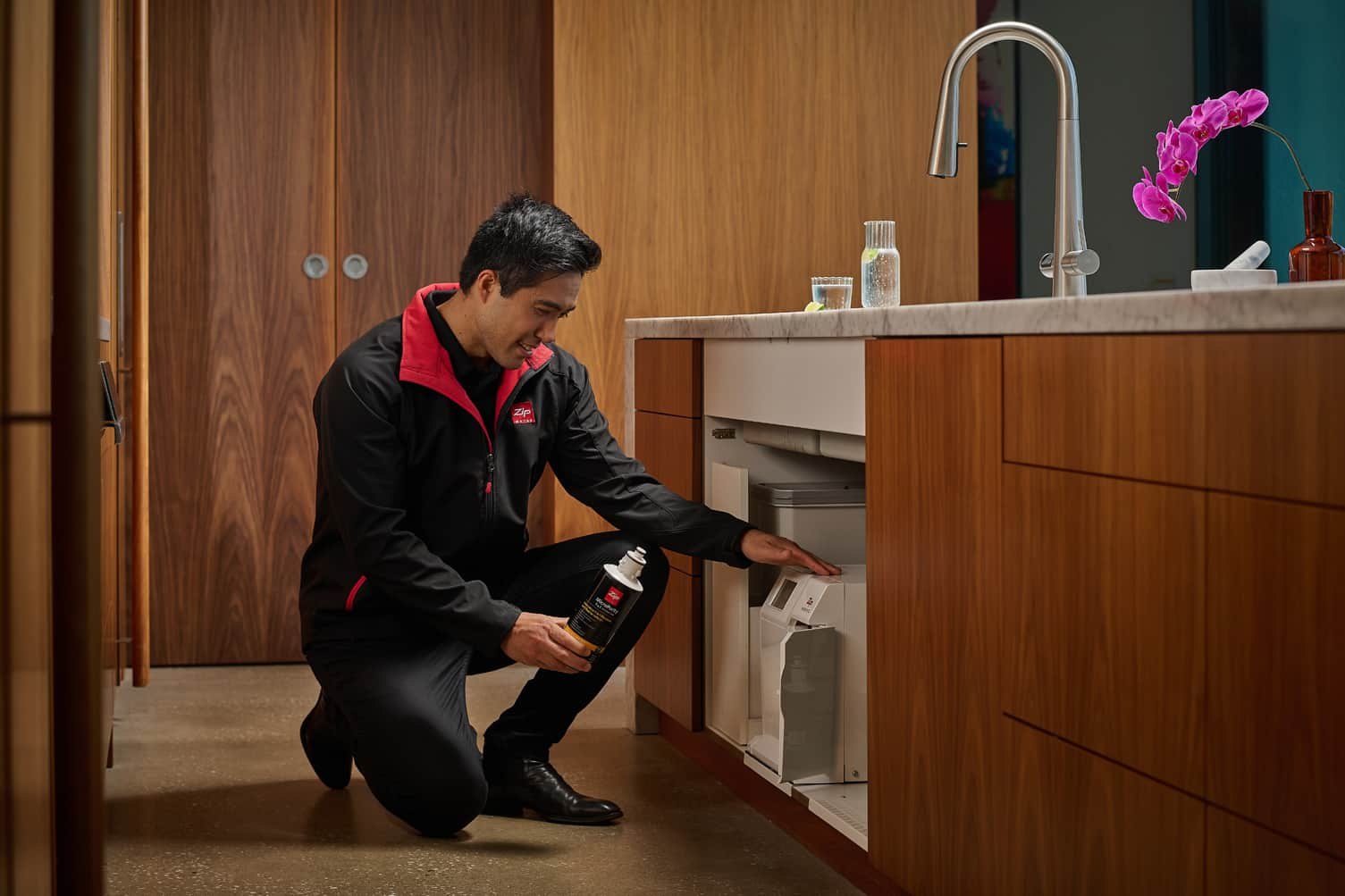
Before you buy, check the space under your bench, confirm you have access to a cold water supply line, and factor in ongoing filter replacements: carbon cartridges typically need changing every six to twelve months, and a neglected filter can do more harm than good.
Look for systems with built-in replacement warnings and a manufacturer-backed filter recycling program.
Your water source and region
Water quality and hardness vary across Australia, and this could influence your choice. In hard water areas like Perth and Adelaide, look for a system with built-in limescale protection or a compatible pre-filter. Scale build-up can reduce filter performance and shorten system life.
In softer water cities like Melbourne and Hobart, chlorine taste is usually the main concern. If you’re on tank or bore water, your supply hasn’t been treated, so you may need a more intensive system like reverse osmosis, and it’s worth having your water tested first.
For a detailed city-by-city breakdown, see our guides to hard water vs soft water and whether tap water is safe to drink in Australia.
What contaminants matter to you
Not every filter needs to do everything. Match the system to your actual concerns:
-
Taste and chlorine only? An inline carbon filter will do the job.
-
PFAS, microplastics, or lead? Look for a certified multi-stage system with sub-micron filtration and NSF/ANSI 53 and 401 certification.
-
Fluoride removal? You’ll need reverse osmosis. Carbon filters don’t remove fluoride.
-
Filtered boiling, chilled, or sparkling water? Only integrated systems like the Zip HydroTap offer this from the same filtered supply.
Learn more about whether water filters remove microplastics.
Design and kitchen fit
An under-sink system should suit your kitchen. Consider whether you want a standalone filtered water tap alongside your existing tap, or an all-in-one tap that replaces it entirely (one tap for filtered boiling, chilled, sparkling, plus unfiltered hot and cold for washing up).
Think about the space under your bench – the command centre or filter housing needs room plus ventilation clearance. And if aesthetics matter, look for a range of tap styles and finishes that complement your kitchen design (so you’ll be happy to look at it for years to come).
Not sure which configuration suits your kitchen? The HydroTap selector tool walks you through it in five steps. Or explore our guide on how to choose your HydroTap.
Zip HydroTap: more than an under-sink filter
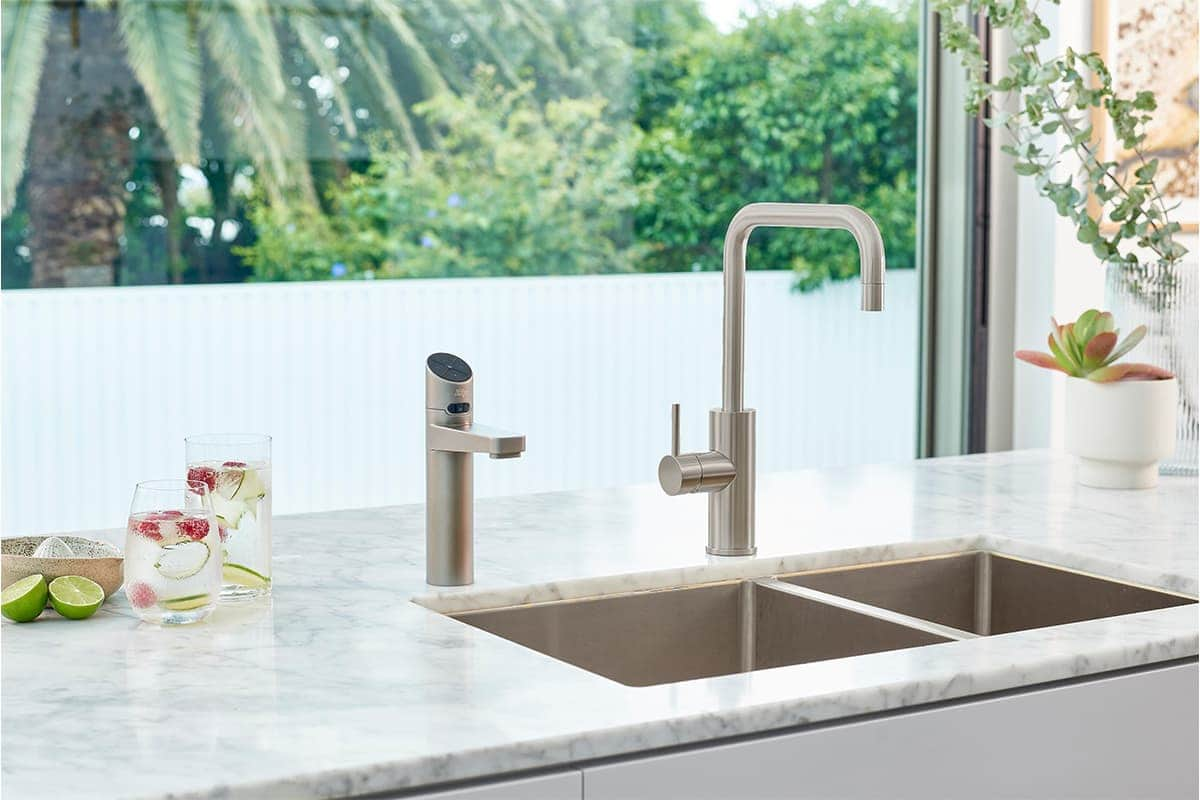
The Zip HydroTap is a fully integrated under-sink water filtration system that combines high-performance filtration with instant access to boiling, chilled, and sparkling water. All from a single tap.
Filtration
MicroPurity filtration filters down to 0.2 microns (25 times finer than a standard filter jug). It’s independently certified to NSF/ANSI 42, 53, and 401, reducing the eight most harmful contaminants in our drinking water: microplastics, lead, asbestos, sediment, chlorine, bacteria, Cryptosporidium and Giardia, and 99.4% of total PFAS*.
Because MicroPurity uses activated carbon rather than reverse osmosis, it retains your water’s beneficial minerals. It also inhibits microbial growth within the filter cartridge. And when it’s time for a replacement, your HydroTap tells you – a flashing alert light means no guessing and no risk of running on an exhausted filter.
Beyond filtration
Zip’s HydroTap is a complete drinking water system – you can pour filtered boiling, chilled and sparkling water from a single tap. No kettle, jug filter, bottles or clutter.
Choose an all-in-one model and you get filtered and unfiltered water through one tap, including hot and cold for washing up. The system is engineered to be as efficient as it is convenient. Air-cooled chilling means no water is wasted on cooling, and R290 refrigerant delivers a 95% reduction in Global Warming Potential compared to conventional refrigerants.
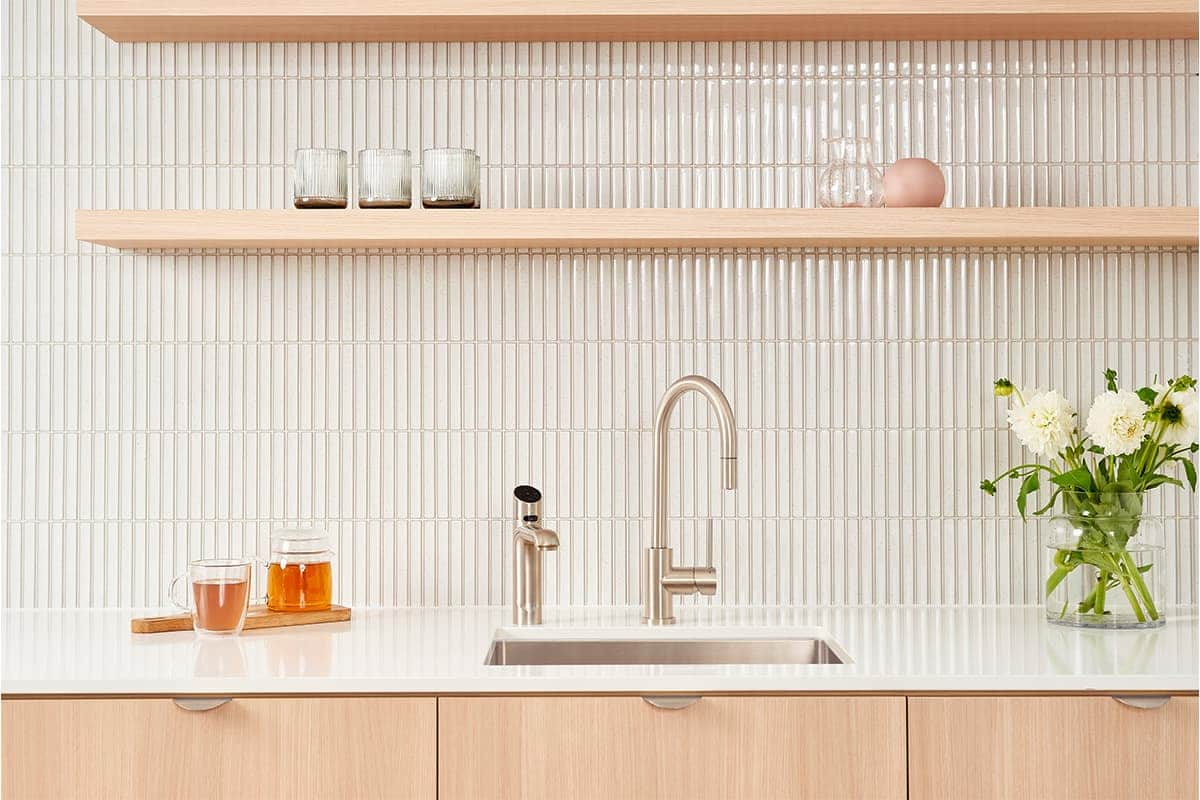
And with multiple tap styles and seven finishes, there’s a HydroTap designed to suit your kitchen, not just how you like your water.
Button: Learn more about the HydroTap
Installation and support
Every HydroTap is WaterMark certified and AS/NZS 3497 compliant. Zip offers certified installation by Zip-certified technicians, including stone cutting if your benchtop requires it.
With more than 130 certified technicians and 350 service providers nationwide, support is never far away. And in hard water areas like Perth and Adelaide, a limescale pre-filter is recommended for extra system protection.
All Zip products are designed and manufactured in Sydney. They have been for more than 75 years.
Button: Use our HydroTap selector tool
FAQ: Under sink water filters
What is the best under-sink water filter in Australia?
It depends on your water source, your contaminant concerns, and what you want from your tap. On treated town water, look for a certified multi-stage system with a sub-micron pore size and NSF/ANSI 53 certification. If you need fluoride removal or you’re on bore water, reverse osmosis is worth considering. And if you want filtration plus instant boiling, chilled, or sparkling water, an integrated system like the Zip HydroTap is designed for exactly that.
Do I need a plumber to install an under-sink water filter?
For any system permanently connected to your household plumbing, yes. WaterMark compliance under the National Construction Code requires licensed installation across Australia.
How often do under-sink water filters need replacing?
Carbon block cartridges typically need replacing every six to twelve months. Sediment pre-filters every three to six months. RO membranes every two to three years. Always follow manufacturer guidance, and look for systems with built-in replacement indicators.
Can an under-sink water filter remove PFAS?
Only if it’s independently certified to do so. Look specifically for NSF/ANSI Standard 53 certification for PFAS reduction – not all under-sink filters target PFAS, and most basic carbon systems don’t. Zip Water’s MicroPurity filters are certified to reduce 99.4% of total PFAS*. Learn more about whether PFAS can be filtered out of water.
What are the pros and cons of an under-sink water filter?
The main advantages: cleaner, better-tasting drinking water; a clutter-free kitchen with everything hidden under the bench; and significantly lower long-term costs compared to bottled water. The trade-offs: most systems require professional installation; filters need replacing on a regular schedule; and performance varies widely between brands. The key is choosing a system that’s independently certified for the contaminants you care about, and committing to the semi-regular maintenance.
Is an under-sink filter worth the cost compared to bottled water?
In most cases, yes. For a typical Australian family, a quality under-sink system costs a fraction of what they may spend on bottled water over time. Sydney Water found that bottled water cost up to 2,000 times tap water per litre.
Even a premium under-sink system pays for itself relatively quickly (and keeps delivering clean water for years). You’ll also reduce plastic waste and free up space in your fridge and recycling bin.
For more answers, see our common questions about water filters.
* Zip MicroPurity filters sizes 1 and 1.5 (93701 and 93702) are certified to NSF/ANSI Standard 53 to reduce 99.4% of Total PFAS (average reduction).