


Bacteria & Legionella in water – how to keep users safe
Health | 27-08-26

Minimising the risk of bacterial infections such as Legionella from drinking water is, without a doubt, the number one priority for specifiers and facilities managers when choosing new products or systems.
In higher-risk environments such as hospitals, care homes, and healthcare facilities, water safety requires more than standard filtration alone. Systems specifically designed to reduce the risk of waterborne pathogens are increasingly being specified.
For example, Zip Water's UltraCare range has been developed for these environments, using a multi-barrier approach to reduce microorganisms such as Legionella within drinking water systems. But more on that later.
In this article, we'll cover different risks to health of bacteria and Legionella in water and the ways in which these risks can be reduced or eliminated using thoughtful design and the right products.
What bacteria is found in Australian tap water?
When not properly managed, water systems can harbour various bacteria that pose health risks, especially in hospitals and aged care facilities or for people with weakened and compromised immune systems.
A range of pathogens and infection-causing bacteria can be found in Australian water. These common bacteria can lead to illness and serious health issues if not adequately controlled or reduced, and include:
Legionella
It's a name we've all heard, but what is Legionella?
Legionella bacteria can cause Legionnaires' disease, a severe form of pneumonia contracted by inhaling airborne droplets of water containing Legionella. Legionella bacteria thrive in standing water systems. When someone has contracted Legionnaires' disease, they can develop a serious respiratory infection.
Escherichia coli (E. coli)
Found in the lower intestine of warm-blooded organisms, you can be exposed to E. coli through contaminated water. Exposure can cause severe gastrointestinal illness and even kidney failure in vulnerable individuals, such as young children and older adults.
Pseudomonas aeruginosa
Found in various water environments and a common concern in hospitals and aged care settings, Pseudomonas aeruginosa can cause infections, particularly in individuals with weakened immune systems. If an infection develops, it can lead to serious health complications, which may become severe without prompt and appropriate treatment.
Cryptosporidium
Resistant to chlorine disinfection, Cryptosporidium is a microbiological cyst that can cause gastrointestinal illness, particularly in children and immunocompromised adults. This parasitic organism is a significant public health concern in Australia, particularly following water quality incidents in various regions.
Enterococci
Found in the intestines of humans and warm-blooded animals, Enterococci indicates recent faecal contamination, similarly to E. coli. Its presence signals recent contamination and highlights an increased risk that other disease-causing microorganisms, including bacteria, viruses, and parasites, may also be present in the water.
Coliform bacteria
Though it's unlikely to cause direct illness, if coliform bacteria is present in public water systems or in your water supply, it could indicate other pathogens are present, making that specific water source unsafe.
What is the quality of tap water like in Australia?
Australian tap water is amongst the safest in the world. It’s tightly regulated under the Australian Drinking Water Guidelines and carefully managed by local health departments and water utilities. Tap water is regularly tested for bacteria, heavy metals, and other known risks. It must meet strict national standards.
The drinking water guidelines are part of the National Water Quality Management Strategy and are ultimately managed by the National Health and Medical Research Council.
However, “safe” doesn’t always tell the whole story.
Water quality can vary depending on where you live, the pipes in your home, and even how long the water sits before you use it. What comes out of the tap might be perfectly legal and safe, but not always what you want in your glass.
How common is Legionella bacteria in Australian tap water?
About 400 cases are notified each year, mostly in older people and those that are immunocompromised. When Legionella does occur, this potentially fatal type of pneumonia is often preventable.
Caused by inhaling tiny droplets containing viable Legionella bacteria, temperature control is key in the prevention of Legionella growth and spread. Bacteria multiply in temperatures between 20-45℃, where nutrients are readily available, and become dormant below 20℃. Legionella bacteria thrive in standing water as, when stagnant, water acts as an incubator for bacteria and pathogens.
How standing water helps spread Legionnaires' disease
When it comes to washroom products used in large builds, whether a healthcare centre or an office, hotel, restaurant, or any other commercial environment, standing water is a chief concern. It's essential that water delivery systems used in buildings like hospitals and healthcare centres avoid using standing water which, once circulated through a building, can quickly spread contamination and waterborne illnesses.
Not only do bigger buildings tend to be used by a higher volume of people, but they are also more vulnerable to Legionella contamination as they have larger, more complex water supply systems in which the bacteria can quickly spread.
Why Legionella thrives in building water systems
When Legionella is allowed to grow unhindered in warm, wet, and dark conditions, it will multiply faster, posing a greater risk of the infectious disease spreading. Aerosolisation happens when the water that Legionella bacteria are growing in becomes microscopic water droplets – this can happen at a shower head or tap.
Once the contaminated water is in this state, it can be easily breathed in, and that means people can develop Legionnaires' disease and become very sick.
Reducing the risk of Legionella in water
Fortunately, there are solutions – with Zip Water's market–leading 8–in–1 filtration technology and UltraCare defence system.
UltraCare is not a separate tap, but a specialised protection system designed for healthcare and high-risk environments. It integrates with selected HydroTap drinking water systems to provide an additional multi-barrier defence against waterborne pathogens.
UltraCare systems include a UV-C LED disinfection module, market-leading MicroPurity™ filtration, antimicrobial additives applied to key components throughout the water path, and routine support from our HydroCare team.
All of these barriers of defence combine to provide highly effective protection against potentially harmful pathogens. Explore our UltraCare range.
How do I know if my drinking water contains Legionella?
Legionella bacteria are invisible to the naked eye and water sources require laboratory testing for accurate detection.
There are several factors that may put your drinking water systems at risk of developing Legionella bacteria. These include:
-
Unusual water temperatures: if the temperature of your water has moved outside of its usual range
-
Stagnant water: if water has remained stationary in one part of your water systems for a period of time
-
Inconsistent chlorine levels: if the amount of chlorine in your water systems has fluctuated or decreased
If you're concerned that your water system may have become contaminated, it's important to arrange for testing to take place immediately.
How Zip Water can help prevent Legionnaires' disease and bacteria in water
We understand that Legionella is a real risk for many buildings and that specifiers are looking for easy ways to minimise this risk. With this in mind, we have developed a number of product ranges designed to prevent Legionella from becoming dangerous.
HydroTap and UltraCare – flagship protection
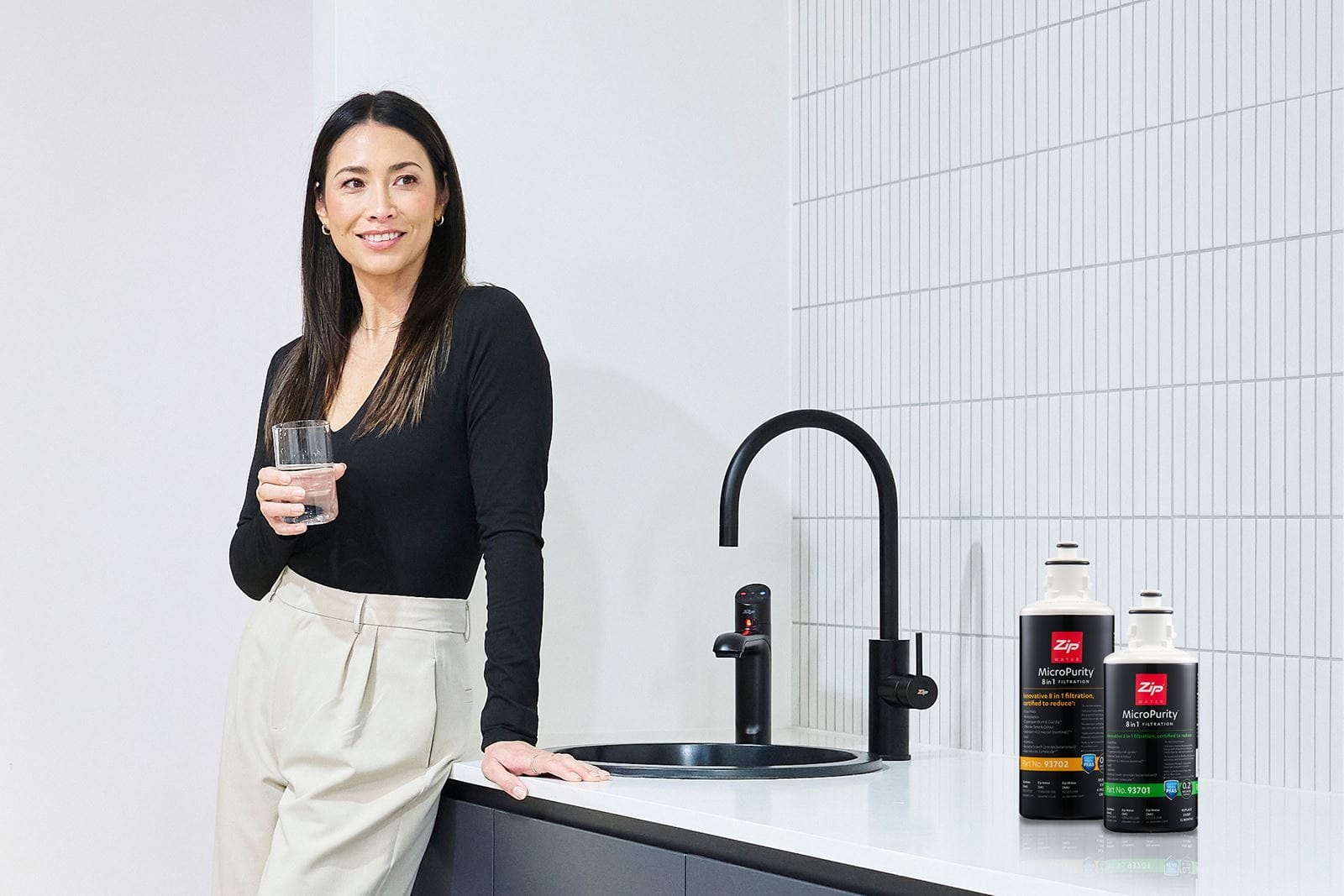
Perfect for busy offices and workplaces, HydroTap is a drinking water filter tap that contains our market-leading 8-in-1 MicroPurity™ filtration system. This is independently certified to reduce the eight most harmful contaminants in drinking water, including Cryptosporidium and Giardia, as well as other contaminants like lead, microplastics, and cysts, and PFAS.
And with UltraCare, a four-barrier defence system we've specially designed for healthcare and aged care settings, HydroTap is proven to deliver a 99.9% reduction in Legionella bacteria found in water.
Combating Legionella in water with Zip Water
By enhancing your water safety protocols and adopting innovative products like ours, you can protect users from the potentially severe health risks associated with Legionella and other bacteria found in drinking water.
If Legionella in water is a concern in your building or project, or you'd like to learn more about how our products and services, including UltraCare, could help your workplace, then please get in touch.